Why Wealth Management Could Be One of the Most AI-Proof Careers in the Future
 Written by Tanvi Sharma - Tue, 02 Jun 2026
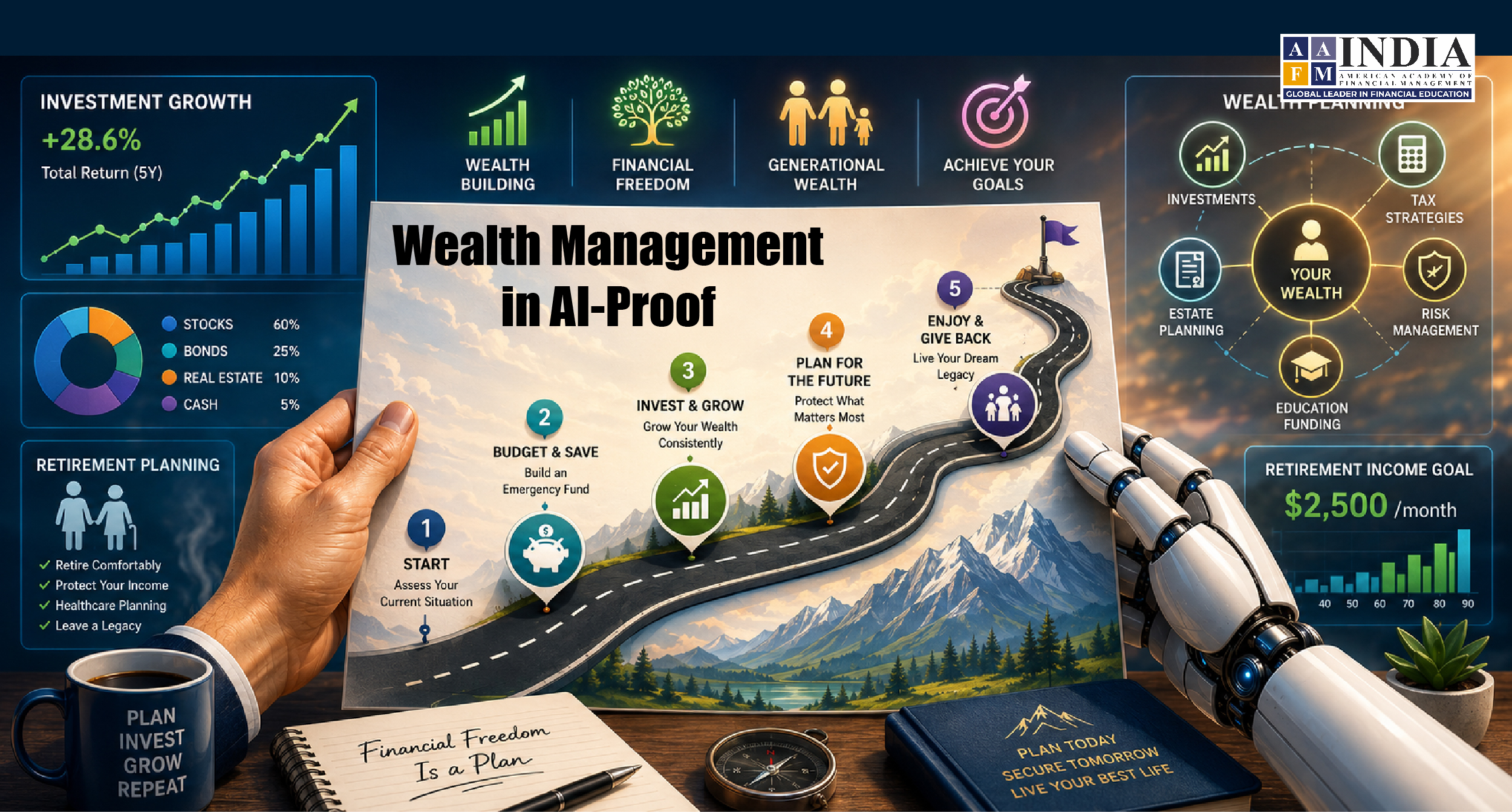
“Some years ago, people were concerned about the threat to factory jobs by robots, and now many graduates are concerned about AI replacing them before they start their careers.”
It takes four years for a student to get a degree. A finance professional spends years learning how to analyse reports, study markets, and build financial models. One day, they begin to use an AI tool and see it finish what used to take hours in seconds.
It's exciting.
It's impressive.
And if we're being honest, it's also a little unsettling.
Questions that felt distant just a couple of years ago are suddenly becoming very real.
Will AI replace finance jobs?
Will analysts still be needed?
Which careers are actually safe from AI?
These concerns have only grown stronger as artificial intelligence becomes a part of everyday work. AI is already transforming business operations, from report writing to data analysis and insights generation.
But here's what often gets lost in the discussion.
Not every career is affected in the same way.
Some jobs are built around processing information. Others are built around understanding people.
Some roles depend heavily on data. Others depend on trust.
And that distinction may become increasingly important in the years ahead.
A recent study by Anthropic, the company behind Claude AI, has indicated that AI tools are likely to automate tasks, rather than replace entire professions. Roles that depend on trust, relationships, and decision-making continue to have a strong human advantage.
This is where wealth management stands out.
At a time when technology can generate investment insights, compare products, and analyse market trends almost instantly, the role of a wealth manager extends beyond information.
And that raises an interesting question:
Could wealth management become one of the most AI-proof careers in the future?
What Anthropic's AI Report Found
Anthropic analysed hundreds of job categories to examine the tasks within them to understand the potential effect of AI on jobs.
A takeaway was that AI has a greater chance of automating specific tasks rather than replacing jobs.
The report revealed that jobs that are more likely to be exposed to AI include research, data analysis, documentation, and repetitive information processing. Meanwhile, jobs requiring human judgment, trust, communication and relationship-building are far more challenging to automate.
One additional notable takeaway is that entry-level jobs could be the first to be affected, as many routine tasks that are usually performed by recent graduates can now be handled with the help of AI.
In simple terms, the future may belong less to professionals who only process information and more to those who can interpret it, advise others, and build meaningful relationships.
You can read the full research report here:
Labor market impacts of AI: A new measure and early evidence
What Makes a Career Vulnerable to AI?
When we examine the most AI-exposed jobs, a clear pattern starts to emerge.
AI performs best when work follows a predictable process. AI-powered tools can often work faster and more efficiently on tasks like analysing, generating reports, processing information, or following predefined rules.
This doesn't mean these jobs will disappear overnight. But it does imply that the work of many professionals whose primary jobs involve routine and repetitive tasks could be increasingly automated.
On the other hand, careers become much harder to replace when they require:
-
Human judgment
-
Relationship building
-
Trust and credibility
-
Understanding individual needs
-
Complex decision-making
-
Emotional intelligence
For instance, an artificial intelligence tool can compare investment choices within a few seconds. However, it cannot provide the same level of understanding of retirement, family needs, future aspirations, or risk tolerance that a human advisor can.
This distinction is becoming increasingly important in the financial services industry. While technology continues to improve at analysing information, many financial decisions still depend on conversations, context, and confidence.
And that's exactly what makes wealth management different from many traditional finance roles.
Why Wealth Management Is Different From Traditional Financial Analysis
Financial analysis and wealth management are both part of the finance industry, but with different focuses.
The main concern of financial analysis is to analyze information, identify trends, and provide insights. Wealth management involves assisting individuals in making the right financial choices based on their objectives and personal factors.
A financial analyst will review the possibilities of investing in a particular asset, while a wealth manager will assist individuals in answering questions such as:
-
Can I retire comfortably?
-
How should I plan for my child's education?
-
How much risk should I take?
-
How can I preserve wealth for future generations?
Can AI Replace Wealth Managers?
The answer is short and simple – not completely. AI has the ability to process data, track portfolios, create reports, and find investment opportunities at a much faster speed than ever before. These capabilities are already helping financial professionals work more efficiently.
But wealth management is not just about the numbers and the investments. It involves knowing a client's financial objectives, risk preference, family plans, and future plans.
For instance, two clients could have the same amount of income and investment portfolio but need entirely different strategies because of their life situation and future plans.
This is where human expertise continues to matter. AI can give insights and recommendations but trust building, understanding personal needs, and guiding important financial decisions are complex human tasks.
In other words, the future may not be AI versus wealth managers, but AI-powered wealth managers delivering better outcomes for their clients.
Five Reasons Wealth Management Could Remain an AI-Proof Career
1. Trust Cannot Be Automated
Money is personal.
Everyone wants to be confident in their decisions, whether preparing for retirement, managing family wealth, or investing for the long-term. AI can give you information, but human relationships, experience, and continual guidance can build trust.
For many clients, that trust is one of the most valuable things that a wealth manager can offer.
2. Financial Decisions Are Often Emotional
Financial decisions are rarely based on numbers alone.
In times of market volatility, many investors may feel nervous and make hasty decisions. Wealth management professionals help their clients focus on their long-term plans and avoid mistakes made out of emotions.
This kind of human understanding is hard to replicate with technology.
3. Every Client Has Unique Goals
No two clients have the same financial journey. While one person may be focused on building wealth for retirement, another may be saving for a child's education, planning a business succession, or looking to preserve wealth for future generations.
Even clients with similar incomes and investment portfolios can have very different priorities, risk appetites, and long-term objectives. This means financial advice cannot always follow a standard formula.
4. Wealth Planning Requires Human Judgment
Financial planning often involves balancing multiple factors such as risk, taxation, family priorities, and future objectives.
While AI can provide data and recommendations, determining the best course of action frequently requires professional judgment and real-world experience.
5. AI Works Best as an Assistant
Perhaps the strongest argument is that AI and wealth managers are not competitors.
AI can assist in automation of research, reporting, and data analysis, enabling professionals to work more efficiently. This allows wealth managers to dedicate more time to strategic planning, client relationships, and tailored investment advice.
How AI Is Changing Wealth Management
AI is not taking the place of wealth management but it is transforming the way it works.
AI-based tools can streamline routine tasks, such as market research, portfolio analysis, and performance reporting, which previously took up a lot of time.
With less time spent on information-gathering, wealth managers now have the time to interpret data and come up with better solutions while interacting with clients.
This evolution is also having an impact on job requirements as technical knowledge alone is no longer enough for many professions. Financial professionals today are expected to combine financial know-how with advisory skills and be informed about current technologies.
In conclusion, AI is not changing the purpose of wealth management but rather the way that wealth management adds value.
Skills Future Wealth Managers Need in an AI-Driven World
-
Financial and wealth planning
-
Investment and portfolio management
-
Risk assessment
-
Client relationship management
-
Communication and advisory skills
-
Behavioral finance
-
Understanding and using AI-powered financial tools
The ability to combine technology with human insight will become increasingly important. Clients have access to more information than ever before, but they still need to have professionals who can explain the information to them and how to use it for them to achieve their own financial objectives.
FAQs
Q1. Is wealth management an AI-proof career?
No job is entirely AI-proof. However, wealth management is regarded as more resilient since it is dependent on trust, interpersonal connections, and financial advising, in which humans play a significant role.
Q2. Is wealth management a good career in 2026 and beyond?
Yes. With an increasing number of people who desire tailored financial advice and wealth planning services, the need for skilled wealth managers will likely be high in future years.
Q3. Which certification can help build a career in wealth management?
Professionals can pursue specialized certifications to strengthen their knowledge and credibility. The certifications like Chartered Wealth Manager® (CWM®), Certified Financial Planner (CFP) are some of the popular options that focuses on wealth planning, investment management, and client advisory.
Q4. What makes wealth management different from financial analysis?
Financial analysis is the study of data, markets, and investments. In contrast, wealth management is a more holistic approach that enables clients to make informed financial choices based on their objectives, lifestyle, and long-term plans.
Q5. What careers in finance are less likely to be replaced by AI?
Careers related to advisory services, relationship management, and personalized financial planning are less likely to be impacted by AI. Examples include wealth management, financial planning, private banking, and estate planning.
Author by
Comments (0)
Search
Popular categories
Wealth Management
13Finance
10Financial Planning
7Finance Certifications
5Investing
3Financial Statements
2Latest blogs

Behavioural Biases in Investing: Types & How to Avoid Them
Tue, 01 Sep 2026 0 227

Key Clarification on PPF Rules: Understanding the Impact on Minor Accounts
Sat, 22 Aug 2026 0 455

Gen z investors and wealth managers
Wed, 12 Aug 2026 0 334
Write a public review