What Is a Family Trust? Meaning, Types, Benefits and Setup in India
 Written by Sonal Sharma - Sat, 15 Mar 2025

A family trust, also called a private family trust, is a legal arrangement in which a settlor transfers assets to trustees, who hold and manage them for family members (the beneficiaries) as set out in a trust deed. In India, private family trusts are governed by the Indian Trusts Act, 1882.
A family trust is mainly used for succession planning and for managing family assets such as property, investments and business shares. Unlike a will, which takes effect only after death, a family trust can start working during the settlor's lifetime. A trust is not a separate legal entity like a company: the trustees hold legal title to the trust property and manage it for the beneficiaries.
Purposes of a Private Family Trust
Wealth Preservation and Asset Protection: A private family trust keeps family assets together under one deed and one set of trustees. Assets stay apart from the settlor's personal liabilities only if the trust is created in good faith and before any claim arises; a transfer made to defeat creditors can be set aside by a court.
Estate Planning: A private family trust can set out how assets are distributed after the settlor's death and provide for minors, persons with disabilities or other beneficiaries who need help managing their affairs. For the wider picture, read our guide to wealth succession planning.
Business Succession: A private family trust can hold shares of a family business so that ownership and succession are managed under the trust deed. How the trust's income is taxed depends on the type of trust
Provision for a Dependent with a Disability: A private family trust can set aside assets for a family member with a disability and have a trustee manage the funds for their long-term care.
Benefits of a Family Trust in India
There are several reasons why an individual may choose to create a private family trust:
Asset protection: Assets held by trustees are kept separate from the settlor's personal holdings, subject to the limits explained under Purposes above.
Tax planning: How a trust is taxed depends on its type. India does not levy an estate or inheritance tax at present, so tax planning around a trust focuses on how trust income is taxed and how assets are transferred into the trust. See "Taxation of a Family Trust in India" below.
Control over assets: A trust allows the individual to maintain control over their assets even after they pass away, by specifying how and when the assets will be distributed to beneficiaries.
Privacy: A trust deed is a private document and is not filed with a court. A will may have to go through probate in some cases, which creates a court record. A deed that transfers immovable property must still be registered.
Providing for beneficiaries: Trusts can be used to provide for beneficiaries who may be unable to manage assets on their own, such as minors or individuals with special needs.
Continuity of family wealth: Trusts can help preserve and pass on family wealth from one generation to the next.
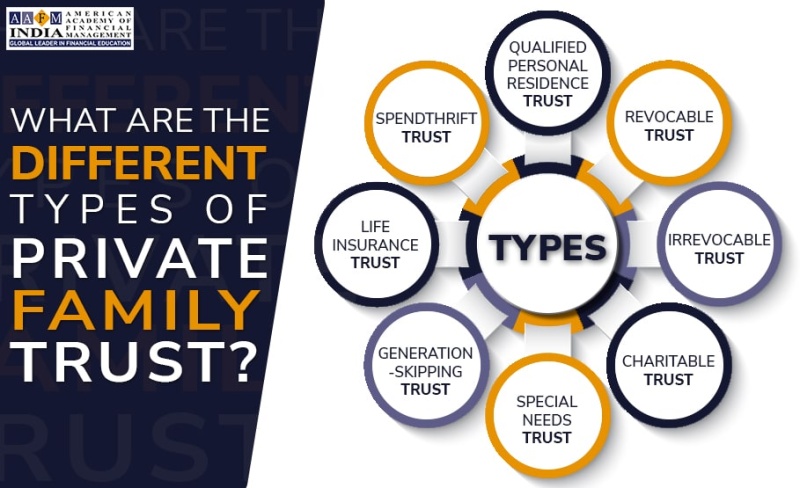
Types of Family Trusts in India
Revocable Trust: This type of trust can be modified or revoked by the settlor (the person who creates the trust) at any time.
Irrevocable Trust: This type of trust cannot be modified or revoked by the settlor once it has been established.
Life Insurance Trust: This type of trust is used to hold and manage a life insurance policy for the benefit of specified beneficiaries.

Specific (Determinate) Trust: A specific trust is one in which the beneficiaries and their shares are named in the trust deed, so each beneficiary's entitlement is fixed. It is the counterpart of a discretionary trust.
Discretionary Trust: A discretionary trust is a trust where the trustee has discretion to decide how and when to distribute the income or assets of the trust to the beneficiaries. It is one of the most popular types of trusts in India as it gives the trustee maximum flexibility in managing the assets of the trust.
Specific Purpose Trust: A specific purpose trust is a trust that is set up for a specific purpose, such as building a hospital or setting up a scholarship.
Will Trust: A will trust is a trust that is created through a will. It comes into effect after the death of the testator and the assets are distributed as per the terms of the will.
It's important to note that laws and regulations regarding trusts in India can be complex, and it's recommended to consult a lawyer or financial advisor for guidance on setting up a trust that meets your specific needs and goals.
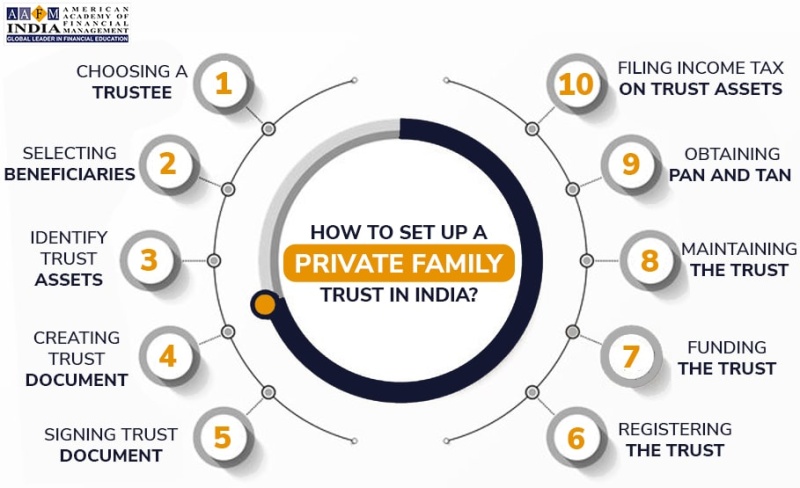
A family trust is created through a trust deed that a lawyer drafts once the settlor has decided the purpose, trustees, beneficiaries and assets. Setting one up involves legal drafting, stamp duty and annual compliance, so take advice before you begin.
How to Create a Family Trust in India: Step-by-Step
Step 1. Decide the purpose and type - Decide what the trust is for (succession, business shares, provision for a dependant) and whether it will be revocable or irrevocable, and discretionary or specific.
Step 2. Choose the trustees - Appoint one or more trustees: family members, professionals or a corporate trustee.
Step 3. Identify the beneficiaries - Name the beneficiaries and set out their shares or the conditions for distribution.
Step 4. Identify the trust property - Decide which assets will be settled into the trust, such as cash, shares or property.
Step 5. Draft the trust deed - Have a lawyer draft a deed that covers the points listed under "What Should a Family Trust Deed Contain?" below.
Step 6. Execute the deed - The settlor and trustees sign the deed on stamp paper of the value required by the state, usually in the presence of witnesses.
Step 7. Register the deed where required - Registration is compulsory under the Registration Act, 1908 if immovable property is settled into the trust.
Step 8. Get a PAN and open a bank account - The trust needs a PAN and a bank account in the trustees' names. Apply for a TAN only if the trust will deduct tax at source.
Step 9. Transfer the assets - Transfer the assets to the trustees, for example by retitling property or moving shares to the trust's demat account.
Step 10. Maintain accounts and file returns - The trustees keep accounts and file the trust's income tax return every year.
The Indian Trusts Act, 1882 governs the creation and operation of private trusts in India. Have a lawyer and a chartered accountant review the structure before the deed is signed, and review the deed periodically so that it continues to meet the needs of the settlor and the beneficiaries.
How to Choose a Trustee for a Family Trust
The trustee is the person or institution responsible for managing the assets held in the trust and ensuring that the trust's terms are followed.

Here are some factors to consider when choosing a trustee:
Trustworthiness: The trustee must be a trustworthy and reliable person who will manage the trust assets in the best interest of the beneficiaries.
Experience: The trustee should have experience managing assets and understanding the legal and financial responsibilities of being a trustee.
Availability: The trustee should be available to manage the trust assets on an ongoing basis and be able to make decisions in a timely manner.
Independence: The trustee should be independent from the beneficiaries and the settlor to avoid conflicts of interest.
Professionalism: Consider hiring a professional trustee such as a bank or trust company, if the trust assets are complex or if the trustee is not able to manage the trust assets effectively.
Communication: The trustee should be able to communicate effectively with the beneficiaries and provide them with regular reports on the trust's assets and performance.
A trustee can be replaced if circumstances change, but the process depends on the trust deed and can be costly and time-consuming, so choose with care.

What Is a Corporate Trustee?
typically a company, that is appointed to act as a trustee of a trust. The role of a corporate trustee is to manage and administer the assets of the trust, as well as to ensure that the trust is in compliance with legal and regulatory requirements. Corporate trustees are companies that offer trustee services, such as trust companies and the trustee arms of banks and other financial institutions
Corporate trustees are usually appointed by the settlor (the person who creates the trust) or by the beneficiaries of the trust. They are typically appointed to provide independent, professional and unbiased administration of the trust. Corporate trustees provide a range of services including trust formation, administration, and asset management.
Corporate trustees are generally considered to be more professional and efficient than individual trustees and are typically better equipped to handle complex and large trusts. They are also considered to be more reliable and stable than individual trustees, as they are less likely to die, become incapacitated, or become unavailable to perform their duties.
It's important to note that, while corporate trustees are subject to regulation and oversight by regulatory bodies, they are also in business to make profit and may charge a fee for their services. And, it's advisable to consult a lawyer or a chartered accountant to select the right trustee for your trust.
What to Check Before Appointing a Corporate Trustee
- Whether it accepts private family trust mandates, and for which asset types
- Its establishment fee, annual fee and charges for additional services
- Its experience with trusts of a similar size and structure
- How often it reports to beneficiaries and what it reports
- How the trustee can be replaced under the deed
A corporate trustee is not the only option. Families also appoint individual trustees, or a mix of family members and a professional trustee.
How Do Corporate Trustees Charge Fees in India?
The fees charged by corporate trustees in India can vary depending on the services provided and the size and complexity of the trust.
Corporate trustees typically charge an establishment fee, which is a one-time fee charged for setting up the trust. This fee can range from a few thousand rupees to several lakhs, depending on the complexity of the trust and the services provided.
Corporate trustees also charge an annual fee, which is a recurring fee charged for providing ongoing administration and management of the trust. This fee can range from a few thousand rupees to several lakhs per year, depending on the size and complexity of the trust.
Corporate trustees may also charge additional fees for specific services such as investment management, tax compliance, and legal services. These fees can vary widely depending on the services provided and the size of the trust.

How to Choose Beneficiaries for a Family Trust
In the process of creating a trust, Beneficiaries are the individuals or organizations that will receive the benefits of the trust assets. There can be two parts to this question.
Who Can Be Chosen As A Beneficiary?
Technically speaking, any person capable of holding property may be chosen as a beneficiary under the Indian Trusts Act, 1882. However, it requires careful consideration of who needs and is considered deserving of being the beneficiary of a trust.
Family members: Family members are common beneficiaries of family trusts. It's important to consider the needs and circumstances of each family member when making the decision.
Charitable organizations: Charitable organizations can be beneficiaries of a trust if the settlor wishes to make charitable donations in a tax-efficient manner.
Individuals with special needs: Individuals with special needs may require additional financial assistance and may be named as beneficiaries of a trust to provide for their needs
Factors to Keep In Mind While Choosing A Beneficiary
Here are some factors to consider when selecting beneficiaries:
Purpose of the trust: Consider the purpose of the trust and the needs of the beneficiaries when selecting them.
Age of Proposed Beneficiaries: Consider the age of the beneficiaries when selecting them. Younger beneficiaries may require additional protection and guidance in managing their inheritance.
Relationship Between Trustee and Beneficiary: It's important to consider how the trustee is connected to the beneficiaries, to avoid conflicts of interest.
It's important to note that the trust's terms can be modified over time to reflect the changing needs and circumstances of the beneficiaries. It's also important to consult with a legal professional to ensure that the beneficiaries are selected in accordance with the law and the trust's terms.
What Should a Family Trust Deed Contain?
The trust deed is the document that governs the trust. A lawyer should draft it, and it should cover:
- The names and details of the settlor, the trustees and the beneficiaries
- The trust property, with a schedule of the assets settled at the start
- The purpose of the trust and how income and capital are to be used or distributed
- Whether the trust is revocable or irrevocable, and discretionary or specific
- The powers and duties of the trustees, including investment powers and remuneration
- How trustees are appointed, replaced and removed, including a successor trustee
- How and when the trust ends

The settlor and the trustees sign the deed, usually in the presence of witnesses, on stamp paper of the value required by the state. A trust of immovable property must be created by a signed, written and registered instrument. Notarisation does not by itself make a trust deed valid. Keep the original deed in a safe place and give each trustee a certified copy.
Conclusion
A private family trust can be created by anyone with assets to place into the trust. Typically, it is established by individuals who wish to manage and protect their assets for the benefit of their family, including themselves during their lifetime and after their death. It could be anyone who wants to pass on their assets to their beneficiaries in a tax-efficient manner or those who want to protect their assets from creditors and legal claims. A lawyer or financial advisor can assist with the creation of a trust and ensure that it is set up in a way that meets the individual's specific needs and goals. To build a career advising families on trusts and succession, explore the Chartered Trust and Estate Planner (CTEP®) certification from AAFM India. You can also read more articles on estate planning.
FAQ
Q1. How do I create a family trust in India?
To create a family trust in India, decide its purpose and type, choose the trustees and beneficiaries, and have a lawyer draft a trust deed. The settlor and trustees sign the deed on stamp paper, and the deed is registered where required, which is compulsory if immovable property is transferred. The trust then gets a PAN, the assets are transferred to the trustees, and the trust files an income tax return every year.
Q2. What are the benefits of a family trust in India?
A family trust supports succession planning, keeps family assets together under one deed and one set of trustees, lets the settlor set conditions on how and when beneficiaries receive assets, provides for minors or dependants who cannot manage assets themselves, and keeps the arrangement private.
Q3. Who owns the assets in a family trust?
Legal ownership rests with the trustees, who hold the assets for the beneficiaries. The beneficiaries hold the beneficial interest, which is the right to benefit from the assets as the deed provides. A trust is not a separate legal entity in India, so assets are held in the trustees' names in their capacity as trustees.
Q4. Is a family trust a discretionary trust?
Not always. A family trust can be discretionary, where the trustee decides who receives what and when, or specific, where the beneficiaries and their shares are fixed in the deed. It can also be revocable or irrevocable. The type affects how the trust is taxed.
Q5. How is a family trust taxed in India?
It depends on the type of trust. Income of a revocable trust is generally taxed in the settlor's hands. For a specific trust, the trustee is assessed as a representative of the beneficiaries and the income is taxed as it would be in their hands. A discretionary trust is generally taxed at the maximum marginal rate, with limited exceptions. Consult a chartered accountant for your structure.
Q6. Is it mandatory to register a family trust deed?
A family trust deed must be registered if it transfers immovable property into the trust, as required by the Registration Act, 1908. For a trust holding only movable assets such as cash or shares, registration of the deed is not compulsory under that Act, but the deed must still be stamped as required by the state.
Q7. What is the difference between a family trust and an HUF?
An HUF arises under Hindu law and is managed by its karta. A family trust is created voluntarily through a trust deed, can be set up by a person of any religion, and is managed by trustees according to the deed.
Q8. Who can be a trustee of a family trust?
Under the Indian Trusts Act, 1882, any person capable of holding property can be a trustee, but where the trust involves the exercise of discretion, the trustee must be competent to contract. A trustee can be a family member, a professional adviser or a company, and a family trust often has more than one trustee.
Q9. Can a private bank or wealth manager help set up a family trust?
Yes, up to a point. Many private banks and wealth managers advise on structuring a family trust and can coordinate with lawyers and chartered accountants. The trust deed itself must be drafted by a lawyer and executed legally. A bank or trust company can also be appointed as a corporate trustee if it accepts private trust mandates; check its fees and terms first.
Author by
Comments (0)
Search
Popular categories
Wealth Management
14Finance
14Financial Planning
7Finance Certifications
5Investing
4Estate Planning
3Latest blogs

Which Is Better: PPF, NPS or EPF? Returns, Risk & Tax
1 Day Ago 0 27

What Are REITs and InvITs in India? A Beginner’s Guide
2 Days Ago 0 41

Gig Economy & Freelancer Finance: Tax, Insurance & Retirement Planning
5 Days Ago 0 77
Write a public review